E3 Company
  • Home
  • Products
    • Drilling
      • RAPTR™
    • Completions
      • Safety RAT™
      • Safety BAT™
  • News & Insights
    • Publications
    • Blog
    • Testimonials
  • Support
  • About Us
    • Leadership Team
    • Board of Directors
    • Where We Operate
    • Legal
  • Careers
  • Contact
  • Menu Menu

How RAPTR™ Delivers Managed Pressure Drilling Outcomes Without the Infrastructure Overhead

Most drilling engineers researching managed pressure drilling already know what a full program costs before they call a vendor: a dedicated equipment stack, a specialized crew, and a longer mobilization timeline. RAPTR™ closes the same pressure window in real time — automated, rig-integrated pressure control built around the equipment already on location — without adding that infrastructure overhead.

What Managed Pressure Drilling Requires on a Traditional Program

A conventional managed pressure drilling program is built around one piece of hardware: the rotating control device. The RCD seals the annulus at surface, which lets the crew apply and adjust backpressure independent of mud weight. Everything else about how the location gets planned and staffed follows from that single piece of equipment being on the wellhead.

The Equipment Stack Behind a Traditional Program

Underneath the RCD sits a choke manifold and backpressure pump package, along with the sensors and data acquisition system that feed real-time annular pressure back to the control station. A mud gas separator and a Coriolis flow meter typically round out the package, since early kick detection depends on catching small flow deviations before they show up as a pressure spike. None of this is portable the way a top drive upgrade is. It has to be trucked in, rigged up, function tested, and eventually rigged back out, which is its own line item on the AFE before a single foot gets drilled under pressure control. Sourcing that equipment and confirming lead time becomes part of the well planning conversation as soon as MPD drilling enters the discussion, not after.

What Is Managed Pressure Drilling Really Solving For?

What is managed pressure drilling really solving for comes down to one number: the margin between pore pressure and fracture gradient. When that margin narrows, small swings in equivalent circulating density can trigger a kick or induce losses in the same interval, sometimes both in the same well. Trip margin and kick tolerance calculations both come out of that same pressure window, since they define how much room the well actually has before a swab, surge, or connection gas event turns into a well control incident.

A full MPD program exists to hold bottomhole pressure inside that window regardless of what the pumps, trip speed, or connection gas are doing at any given moment. That is a legitimate engineering requirement on plenty of wells, particularly where the margin is narrow enough that a standard kill sheet and a watchful driller are not enough on their own. It is also a level of infrastructure that many programs do not actually need to get the same outcome, since the width of the window itself — not just the presence of a pressure event — is what determines how much automated correction a well actually requires.


See whether RAPTR™ can hold your pressure window without adding a dedicated MPD crew to location.

Explore RAPTR™

How RAPTR™ Holds the Pressure Window in Real Time

RAPTR™ is built around the same objective as a full MPD program: keep the wellbore inside its pressure window without waiting for a person to react to a trend on a screen. The difference is in what it takes to get there. Instead of adding a rotating control device and a standalone choke package to the rig, RAPTR™ layers automated, closed loop pressure control onto the equipment and crew already on location.

Closed Loop Control Without the Dedicated Crew

Closed loop drilling means the system reads pressure deviation and corrects it inside the same cycle, not after a report gets pulled and reviewed. RAPTR™ applies that principle directly to wellbore pressure monitoring and response: the system detects drift inside the drilling window in real time and corrects before the deviation has time to develop into a well control event. No dedicated MPD engineer has to read a trend line and call an adjustment. The correction happens at the system level, inside the pressure event, with the response time that automated control makes possible and that manual monitoring cannot reliably match.

What RAPTR™ Doesn’t Require

A rig running RAPTR™ automated pressure control does not need a dedicated MPD engineer on location, a separate choke manifold package, or the mobilization lead time that comes with a full program. The system integrates with the top drive and rig floor equipment already in place, with E3’s remote monitoring capabilities available to track system performance throughout the well without adding dedicated personnel to location. For an operator who needs the pressure outcome without adding a second specialized service crew, that difference shows up directly in the well cost.

Where That Difference Shows Up on the AFE

A full MPD package adds mobilization charges, day rates for the MPD crew, and the standby time required to rig the RCD and choke manifold up and down around casing points. None of that spend shows up in the well’s actual drilling performance. It shows up before the bit ever gets to depth, in mobilization and standby days that get billed whether or not the pressure window is ever tested. RAPTR™ integrates with equipment already contracted for the well, which means the incremental cost is closer to a service upgrade than a second specialized service line. On a program running multiple wells back to back, that difference compounds across every well where the full infrastructure was never actually required to hold the pressure window.

When Full Managed Pressure Drilling Equipment Still Makes Sense

RAPTR™ is not a replacement for every MPD application, and treating it that way would be a disservice to any operator drilling a well where it does not belong. Extended reach wells with genuinely narrow kick tolerance, deepwater programs managing riser margin, and HPHT intervals where surface backpressure needs to reach levels outside what a top drive integrated system is rated for still call for the full rotating control device and choke package. The honest question is not whether managed pressure drilling equipment works. It clearly does, on the wells it was designed for. The real question is whether your specific pressure environment needs the full infrastructure to get there, or whether the same outcome is achievable with less.

Modeling that answer looks a lot like the exercise operators already run when they evaluate torque ratings against a well’s depth and trajectory before selecting a top drive. The same discipline applies to pressure. Map the expected pressure profile across the interval, identify where the margin actually narrows, and size the response to what the well demands instead of defaulting to the heaviest package available because it is the safest assumption on paper. That mapping exercise should happen during well planning, not after the bit is already in the ground and a connection gas trend forces the decision. Pulling offset well data on pore pressure and fracture gradient ahead of spud gives the team a real basis for that call, rather than a default answer applied to every well on the pad regardless of how the margin actually behaves at depth.

Share This Post

  • Share on Facebook
  • Share on X
  • Share on Pinterest
  • Share on LinkedIn
  • Share on Tumblr
  • Share on Vk
  • Share on Reddit
  • Share by Mail

More Like This

Where RAPTR™ Fits in the Drilling Automation Stack (and Why Most Rigs Are Missing It)

Drilling Automation, Drilling Equipment, RAPTR
https://e3team.com/wp-content/uploads/2026/08/Closing-the-Last-Gap-in-Drilling-Automation.jpg 1250 2000 Abstrakt Marketing /wp-content/uploads/2025/03/Logo-with-Tagline-2.png Abstrakt Marketing2026-08-21 13:26:432026-08-21 13:26:49Where RAPTR™ Fits in the Drilling Automation Stack (and Why Most Rigs Are Missing It)
High-Pressure Drilling: Innovations Pushing the Limits of Performance and Safety

High-Pressure Drilling: Innovations Pushing the Limits of Performance and Safety

Drilling Equipment
https://e3team.com/wp-content/uploads/2026/01/High-Pressure-Drilling-Innovations-Pushing-the-Limits-of-Performance-and-Safety.jpg 1250 2000 Abstrakt Marketing /wp-content/uploads/2025/03/Logo-with-Tagline-2.png Abstrakt Marketing2026-01-20 11:01:112026-05-12 13:12:00High-Pressure Drilling: Innovations Pushing the Limits of Performance and Safety

Modular Well Drilling Equipment: The Key to Flexibility

Drilling Automation, Drilling Equipment
https://e3team.com/wp-content/uploads/2025/11/Modular-Well-Drilling-Equipment_-The-Key-to-Flexibility.jpg 1250 2000 Abstrakt Marketing /wp-content/uploads/2025/03/Logo-with-Tagline-2.png Abstrakt Marketing2025-11-14 09:20:372026-05-12 13:12:00Modular Well Drilling Equipment: The Key to Flexibility

4 Ways to Optimize Drilling Performance With Innovative Solutions

Drilling Equipment
https://e3team.com/wp-content/uploads/2025/10/4-Ways-to-Optimize-Drilling-Performance-with-Innovative-Solutions.jpg 1250 2000 Abstrakt Marketing /wp-content/uploads/2025/03/Logo-with-Tagline-2.png Abstrakt Marketing2025-10-13 14:54:192026-05-12 13:12:024 Ways to Optimize Drilling Performance With Innovative Solutions

The Role of Advanced Drilling Equipment in Maximizing ROI

Drilling Equipment
https://e3team.com/wp-content/uploads/2025/10/The-Role-of-Advanced-Drilling-Equipment-in-Maximizing-ROI.jpg 1250 2000 Abstrakt Marketing /wp-content/uploads/2025/03/Logo-with-Tagline-2.png Abstrakt Marketing2025-10-13 14:49:392026-05-12 13:12:02The Role of Advanced Drilling Equipment in Maximizing ROI
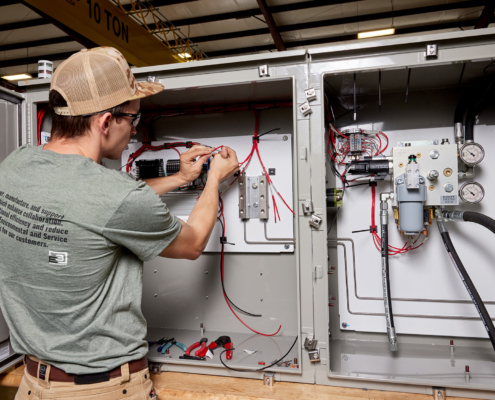
Side view of person in glasses and hat working on internals of machine

How E3’s RAPTR™ Technology Improves Drilling, Safety, and Efficiency

Drilling Equipment, RAPTR
https://e3team.com/wp-content/uploads/2024/09/Side-view-of-person-in-glasses-and-hat-working-on-internals-of-machine.jpg 1250 2000 Abstrakt Marketing /wp-content/uploads/2025/03/Logo-with-Tagline-2.png Abstrakt Marketing2025-10-13 14:37:472026-05-12 13:12:02How E3’s RAPTR™ Technology Improves Drilling, Safety, and Efficiency
Previous Previous Previous Next Next Next

Categories

  • Adaptive Technology in Drilling
  • Automated Pressure Control
  • Automation Transition
  • BAT
  • Compliance
  • Data Monitoring
  • Drilling
  • Drilling Automation
  • Drilling Equipment
  • Emergency Response
  • Frac Equipment Reliability
  • Frac Operations
  • Frac Site
  • Frac Site Automation
  • Frac Site Monitoring
  • Hydraulic Fracturing Automation
  • Jobs
  • Monitoring in Drilling
  • Operational Efficiency in Fracking
  • Pressure Control Automation
  • Pressure Equipment Assessment
  • Pressure Monitoring
  • RAPTR
  • RAT
  • Real-Time Analytics
  • Safety
  • Safety Systems

Contact Us

"*" indicates required fields

Locations

183 Old Post Oak Road
Kilgore, TX 75662

13613 Broadway Dr
Meadville, PA 1633

King Khaled Street
Al Khuzama District
34718 Al Khobar
Saudi Arabia

Canadian Global

261200 Wagon Wheel Way
Calgary, AB T4A 0E3


Get In Touch

Phone
1-877-833-2621

Email

[email protected]

Products

Safety RAT™

Safety BAT™

RAPTR™

Website by Abstrakt Marketing Group ©
  • Sitemap
  • Privacy Policy
Link to: Why 7,500 PSI Drilling Rigs Are Winning: Rethinking the Case for the 10K Upgrade Link to: Why 7,500 PSI Drilling Rigs Are Winning: Rethinking the Case for the 10K Upgrade Why 7,500 PSI Drilling Rigs Are Winning: Rethinking the Case for the 10K Up...The drilling rig close-up is drilling a well against the background of the cloudy sky Link to: Where RAPTR™ Fits in the Drilling Automation Stack (and Why Most Rigs Are Missing It) Link to: Where RAPTR™ Fits in the Drilling Automation Stack (and Why Most Rigs Are Missing It) Where RAPTR™ Fits in the Drilling Automation Stack (and Why Most Rigs Are...
Scroll to top Scroll to top Scroll to top

This site uses cookies. By continuing to browse the site, you are agreeing to our use of cookies.

AcceptLearn more

Cookie and Privacy Settings


How we use cookies

We may request cookies to be set on your device. We use cookies to let us know when you visit our websites, how you interact with us, to enrich your user experience, and to customize your relationship with our website.

Click on the different category headings to find out more. You can also change some of your preferences. Note that blocking some types of cookies may impact your experience on our websites and the services we are able to offer.

Essential Website Cookies

These cookies are strictly necessary to provide you with services available through our website and to use some of its features.

Because these cookies are strictly necessary to deliver the website, refusing them will have impact how our site functions. You always can block or delete cookies by changing your browser settings and force blocking all cookies on this website. But this will always prompt you to accept/refuse cookies when revisiting our site.

We fully respect if you want to refuse cookies but to avoid asking you again and again kindly allow us to store a cookie for that. You are free to opt out any time or opt in for other cookies to get a better experience. If you refuse cookies we will remove all set cookies in our domain.

We provide you with a list of stored cookies on your computer in our domain so you can check what we stored. Due to security reasons we are not able to show or modify cookies from other domains. You can check these in your browser security settings.

Other external services

We also use different external services like Google Webfonts, Google Maps, and external Video providers. Since these providers may collect personal data like your IP address we allow you to block them here. Please be aware that this might heavily reduce the functionality and appearance of our site. Changes will take effect once you reload the page.

Google Webfont Settings:

Google Map Settings:

Google reCaptcha Settings:

Vimeo and Youtube video embeds:

Accept settingsHide notification only