E3 Company
  • Home
  • Products
    • Drilling
      • RAPTR™
    • Completions
      • Safety RAT™
      • Safety BAT™
  • News & Insights
    • Publications
    • Blog
    • Testimonials
  • Support
  • About Us
    • Leadership Team
    • Board of Directors
    • Where We Operate
    • Legal
  • Careers
  • Contact
  • Menu Menu

Eliminate Manual Pressure Control With Drilling Automation

Despite advances in drilling rig automation, many operators still rely on manual pressure control systems. Why? Because they’re familiar, low-cost on the surface, and embedded in long-standing operational routines. But this status quo creates exposure. Manual pressure control demands constant human oversight. Operators must interpret gauges, react quickly to unexpected changes, and physically intervene to prevent equipment failure. That leaves room for error, especially when crews are fatigued or conditions shift rapidly.

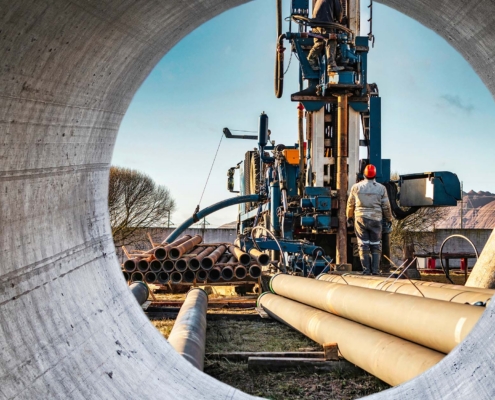
Even skilled drillers can’t react as fast as an automated system. It’s time to shift away from reactive, manual workflows toward integrated, automated safety systems that deliver faster decisions, tighter control, and better outcomes.

How Drilling Automation Transforms Pressure Control

Modern drilling automation replaces guesswork with precision. These systems use embedded sensors to continuously monitor standpipe pressure, flow rate, and other real-time drilling dynamics. The moment pressure approaches preset thresholds, the system reacts automatically.

This means faster pressure bleed-offs, reduced surface pressure variability, and better management of fluid displacement. In some cases, automated units can open or close relief valves in under a second, something no human hand could match.

Beyond reaction speed, drilling automation also brings consistency. Once parameters are calibrated, the system uses logic-based decision-making that removes the variability of human interpretation. Over time, these systems even learn from well conditions and past events to improve future decisions. Automated pressure control eliminates the need for red zone intervention. That reduces crew exposure, lowers incident potential, and allows for drilling closer to upper design limits without added risk.

System Architecture: What Makes Pressure Automation Work

What enables this transformation? It starts with a layered architecture that brings together sensing, control, and communication.

Intelligent Sensors and Controllers

Sensors embedded throughout the rig constantly read pressure, flow, torque, and other performance variables. These feed directly into local control units with built-in logic and programmable safety thresholds.

Edge Processing

Rather than sending all data to the cloud, edge processors enable fast, on-site calculations and decisions. That allows the system to respond instantly, even in low-bandwidth environments.

Central Dashboards and Remote Interfaces

Operators can oversee activity from a safe location through remote dashboards. These interfaces show current pressure readings, valve positions, and alerts, providing both visibility and control, without proximity to risk zones.

Cloud and Data Sync

For longer-term optimization, systems store performance history and feed data into larger drilling analytics platforms. This helps with fleet-wide benchmarking and training future models.

Safety and Compliance Advantages

Drilling automation doesn’t just make operations faster; it makes them safer and easier to audit.

Safer Crew Conditions

With no need for manual pin replacement or red zone access, exposure drops significantly. That reduces recordable incidents, protects crew morale, and improves retention.

Real-Time Shutdowns

If the system detects a pressure surge or fluid anomaly, it can automatically shut down or divert flow to prevent a blowout or equipment failure.

Digital Documentation

All actions, like setpoints, alerts, valve actuations, are logged automatically. That creates a traceable audit trail that satisfies regulators, insurers, and internal compliance teams.

In high-risk environments, these advantages are more than convenience; they’re a baseline requirement for responsible operators.

Manual vs. Automated: Response Time Comparison

Let’s compare real-world performance.

Manual Systems

  • Time to recognize anomaly: 5–30 seconds
  • Time to act: 15–45 seconds
  • Total response window: Up to 1 minute
  • Risk of error: High under fatigue or stress

Automated Systems

  • Time to recognize anomaly: <1 second
  • Time to act: 0.4 seconds or less
  • Total response window: Instant
  • Risk of error: Consistent, logic-based response

When pressure builds fast, every second matters. Manual systems simply can’t keep pace with today’s well complexities. The faster you respond, the fewer consequences you face.

ROI: Cost of Incidents vs. Cost of Automation

Cost is often cited as a barrier to drilling automation, but that equation changes when you look at what downtime and incidents really cost.

Cost of a Pressure-Related Shutdown

  • Lost production: $100K–$500K/day
  • Repair/replacement: $20K–$250K+
  • Investigation and cleanup: Up to $1M+
  • Reputational damage: Long-term

Cost of Automation System (per rig)

  • Initial: $150K–$500K
  • Payback: 6–18 months, depending on incident prevention

When automation prevents even one high-risk pressure event, it pays for itself. Add in improved uptime, longer component life, and fewer compliance issues, and it becomes one of the smartest investments in your fleet.

Let’s eliminate downtime, reduce manual risk, and boost drilling efficiency together. Explore how E3 Company’s automated pressure relief systems can help you lead the next era of safer, faster, smarter drilling.

RAPTR™ Drilling Tech

Getting Started: Retrofitting or Upgrading Pressure Control Systems

You don’t have to wait for a full rig overhaul to benefit from drilling automation. Most modern pressure control systems are designed for phased implementation.

Retrofitting

For legacy rigs, modular automation units can often be integrated into existing layouts. Automated relief valves, smart sensors, and remote interfaces can be installed with minimal disruption to workflows.

Upgrading

If you’re already running a semi-automated rig, upgrades may include better data handling, more accurate sensors, or tighter control logic. These upgrades can be rolled out one system at a time.

Training and Change Management

Success depends on more than technology. Your team needs to understand how the system works, when to trust it, and how to override if needed. Look for partners who offer on-site or virtual training, and make sure SOPs are updated accordingly.

Reducing Manual Work Through Drilling Automated Reports

Automated reporting tools do more than summarize performance. They eliminate hours of manual entry, reduce the risk of error, and keep your teams focused on critical tasks. By streamlining how information is captured, distributed, and analyzed, drilling automated reports create more consistent operations and faster decision-making across your entire rig.

Real-Time Data Logging Eliminates Manual Input

With automated systems in place, pressure readings, flow rates, and equipment performance metrics are logged continuously without operator intervention. This removes the need for crews to track data by hand or enter it into spreadsheets after the fact, freeing them up to focus on live operations instead of documentation.

Standardized Reports Replace Ad Hoc Documentation

Manual reports vary from one shift or driller to the next. Automation enforces consistent formatting, terminology, and metrics across every run. That consistency improves communication between teams and creates a cleaner, audit-ready data trail that doesn’t require extra work to reconcile or clean up later.

Faster Analysis Drives Quicker Decisions

Automated reporting platforms sync with dashboards and analytics tools, allowing supervisors to review trends without waiting for end-of-day reports. Issues like pressure drift, flow inconsistencies, or equipment degradation are flagged instantly. That kind of visibility shortens reaction times and cuts down on the back-and-forth required to validate decisions.

A New Standard in Pressure Safety Starts with Automation

Manual pressure control belongs to the past. With smarter systems, safer crews, and better decisions, drilling automation is rewriting how pressure is managed at the wellsite.

Whether you’re looking to reduce red zone activity, increase consistency across shifts, or gain peace of mind during HPHT operations, automation gives you a strategic edge.

Take Control of Drilling Safety With E3 Company

Pressure control is one of the most important factors in drilling safety and efficiency. With E3’s drilling automation systems, you get real-time response, predictable performance, and data-backed insights, without putting your crew in the red zone. Get in touch with our team today.

Share This Post

  • Share on Facebook
  • Share on X
  • Share on Pinterest
  • Share on LinkedIn
  • Share on Tumblr
  • Share on Vk
  • Share on Reddit
  • Share by Mail

More Like This

ESG in Oil and Gas: 5 Ways Drilling Automation Drives Sustainability and Safety

ESG in Oil and Gas: 5 Ways Drilling Automation Drives Sustainability and Safety

RAPTR
https://e3team.com/wp-content/uploads/2026/04/ESG-in-Oil-and-Gas-5-Ways-Drilling-Automation-Drives-Sustainability-and-Safety.jpg 1250 2000 Abstrakt Marketing /wp-content/uploads/2025/03/Logo-with-Tagline-2.png Abstrakt Marketing2026-04-16 14:21:192026-05-12 13:11:56ESG in Oil and Gas: 5 Ways Drilling Automation Drives Sustainability and Safety
oil drilling in field

Drilling Automation: Reducing Crew Fatigue and Human Error on Today’s Rigs

RAPTR
https://e3team.com/wp-content/uploads/2026/04/oil-drilling-in-field.jpg 1250 2000 Abstrakt Marketing /wp-content/uploads/2025/03/Logo-with-Tagline-2.png Abstrakt Marketing2026-04-09 16:11:502026-05-12 13:11:57Drilling Automation: Reducing Crew Fatigue and Human Error on Today’s Rigs
5 Oil Drilling Issues Field Engineers Face

5 Oil Drilling Issues Field Engineers Face— And How Automation Solves Pressure Challenges

RAPTR
https://e3team.com/wp-content/uploads/2026/03/5-Oil-Drilling-Issues-Field-Engineers-Face.jpg 1250 2000 Abstrakt Marketing /wp-content/uploads/2025/03/Logo-with-Tagline-2.png Abstrakt Marketing2026-03-24 19:08:532026-05-12 13:11:575 Oil Drilling Issues Field Engineers Face— And How Automation Solves Pressure Challenges
Closed‑Loop Pressure Control for Rigs

Closed‑Loop Pressure Control for Rigs: A Practical Guide for Operators

RAPTR
https://e3team.com/wp-content/uploads/2026/03/Closed‑Loop-Pressure-Control-for-Rigs.jpg 1250 2000 Abstrakt Marketing /wp-content/uploads/2025/03/Logo-with-Tagline-2.png Abstrakt Marketing2026-03-24 18:53:452026-05-12 13:11:57Closed‑Loop Pressure Control for Rigs: A Practical Guide for Operators
Petroleum operator in work vest using oil pump rocker-machine

Questions to Ask Before Choosing an Automated Pressure Control Drilling System

RAPTR
https://e3team.com/wp-content/uploads/2026/01/Petroleum-operator-in-work-vest-using-oil-pump-rocker-machine.jpg 1250 2000 Abstrakt Marketing /wp-content/uploads/2025/03/Logo-with-Tagline-2.png Abstrakt Marketing2026-01-28 10:37:492026-05-12 13:11:58Questions to Ask Before Choosing an Automated Pressure Control Drilling System

Automation ROI in Drilling: How RAPTR™ Pays for Itself

RAPTR
https://e3team.com/wp-content/uploads/2025/08/RAPTR-side-by-side-2-2.png 800 1210 Abstrakt Marketing /wp-content/uploads/2025/03/Logo-with-Tagline-2.png Abstrakt Marketing2026-01-23 07:17:372026-05-12 13:11:58Automation ROI in Drilling: How RAPTR™ Pays for Itself
Side view of person in glasses and hat working on internals of machine

How E3’s RAPTR™ Technology Improves Drilling, Safety, and Efficiency

Drilling Equipment, RAPTR
https://e3team.com/wp-content/uploads/2024/09/Side-view-of-person-in-glasses-and-hat-working-on-internals-of-machine.jpg 1250 2000 Abstrakt Marketing /wp-content/uploads/2025/03/Logo-with-Tagline-2.png Abstrakt Marketing2025-10-13 14:37:472026-05-12 13:12:02How E3’s RAPTR™ Technology Improves Drilling, Safety, and Efficiency
Previous Previous Previous Next Next Next

Categories

  • Adaptive Technology in Drilling
  • Automated Pressure Control
  • Automation Transition
  • BAT
  • Compliance
  • Data Monitoring
  • Drilling
  • Drilling Automation
  • Drilling Equipment
  • Emergency Response
  • Frac Equipment Reliability
  • Frac Operations
  • Frac Site
  • Frac Site Automation
  • Frac Site Monitoring
  • Hydraulic Fracturing Automation
  • Jobs
  • Monitoring in Drilling
  • Operational Efficiency in Fracking
  • Pressure Control Automation
  • Pressure Equipment Assessment
  • Pressure Monitoring
  • RAPTR
  • RAT
  • Real-Time Analytics
  • Safety
  • Safety Systems

Contact Us

"*" indicates required fields

Locations

183 Old Post Oak Road
Kilgore, TX 75662

13613 Broadway Dr
Meadville, PA 1633

King Khaled Street
Al Khuzama District
34718 Al Khobar
Saudi Arabia

Canadian Global

261200 Wagon Wheel Way
Calgary, AB T4A 0E3


Get In Touch

Phone
1-877-833-2621

Email

[email protected]

Products

Safety RAT™

Safety BAT™

RAPTR™

Website by Abstrakt Marketing Group ©
  • Sitemap
  • Privacy Policy
Link to: Drilling Safety Redefined: How E3’s Pressure Relief Solutions Set a New Standard Link to: Drilling Safety Redefined: How E3’s Pressure Relief Solutions Set a New Standard Drilling Safety Redefined: How E3’s Pressure Relief Solutions Set a New...The oil workers in the job Link to: Automation ROI in Drilling: How RAPTR™ Pays for Itself Link to: Automation ROI in Drilling: How RAPTR™ Pays for Itself Automation ROI in Drilling: How RAPTR™ Pays for Itself
Scroll to top Scroll to top Scroll to top

This site uses cookies. By continuing to browse the site, you are agreeing to our use of cookies.

AcceptLearn more

Cookie and Privacy Settings


How we use cookies

We may request cookies to be set on your device. We use cookies to let us know when you visit our websites, how you interact with us, to enrich your user experience, and to customize your relationship with our website.

Click on the different category headings to find out more. You can also change some of your preferences. Note that blocking some types of cookies may impact your experience on our websites and the services we are able to offer.

Essential Website Cookies

These cookies are strictly necessary to provide you with services available through our website and to use some of its features.

Because these cookies are strictly necessary to deliver the website, refusing them will have impact how our site functions. You always can block or delete cookies by changing your browser settings and force blocking all cookies on this website. But this will always prompt you to accept/refuse cookies when revisiting our site.

We fully respect if you want to refuse cookies but to avoid asking you again and again kindly allow us to store a cookie for that. You are free to opt out any time or opt in for other cookies to get a better experience. If you refuse cookies we will remove all set cookies in our domain.

We provide you with a list of stored cookies on your computer in our domain so you can check what we stored. Due to security reasons we are not able to show or modify cookies from other domains. You can check these in your browser security settings.

Other external services

We also use different external services like Google Webfonts, Google Maps, and external Video providers. Since these providers may collect personal data like your IP address we allow you to block them here. Please be aware that this might heavily reduce the functionality and appearance of our site. Changes will take effect once you reload the page.

Google Webfont Settings:

Google Map Settings:

Google reCaptcha Settings:

Vimeo and Youtube video embeds:

Accept settingsHide notification only